Case Study
They Asked for a Fundraising Video. I Made a Short Film.
A scripted narrative film about a teenager who stops being the kid who needs someone, and becomes the one who shows up for somebody else.
- Client
- Yeshiva Ohr Shalom
- Industry
- Narrative & Education
Yeshiva Ohr Shalom hired me to make a fundraising video.
The standard version of that film exists and everyone has seen it. Interviews with rabbis, testimonials from parents, footage of boys learning, warm music, an ask at the end. It explains what an organization does. It rarely makes anyone care.
So I wrote a short film instead.
The school
What the yeshiva actually does
Ohr Shalom works with teenage boys who aren't making it in the traditional religious school system. Boys questioning their identity, boys rebelling against how they were raised, boys struggling at home, boys who have simply stopped responding to being told what to do.
What makes the place work is that it doesn't lead with pressure. It leads with relationship.
The boys get somewhere to be. A gym, a basketball court, food, other kids, rabbis who let them show up without an agenda. Torah and responsibility come in through the door of being accepted, not through the door of being corrected.
The idea underneath it is simple and hard to film: a teenager who feels accepted has room to start making his own choices. A kid who arrives angry can, over time, become someone another kid leans on.
That's the transformation. And you can't put it in a testimonial.
The brief
The challenge
A donor already knows what a school is. What they don't know is what it feels like to be the boy who ends up there, and no amount of explaining gets them there. Explaining produces agreement. It doesn't produce giving.
The film had to make someone feel it. Which opened three ways to fail.
Get it wrong one way and it's preachy, a message with characters attached to it. Get it wrong another way and it's manipulative, engineering tears out of a teenager's pain. Get it wrong a third way and it's dishonest, softening how genuinely hard this is for the boys the place exists to serve.
Authentic without being preachy. Emotional without being manipulative. Hopeful without pretending the struggle isn't real.
Every decision came back to holding those three at once.
The story
The story
It opens on a family that has stopped being able to talk to each other.
The boy is frustrated. His parents are frustrated. Everyone means well and nobody is getting through. Eventually he takes off his kippah and walks out.
The parents are not the villains. That was the first decision I made and the one I protected hardest. This isn't a film about bad parents. It's about a family that loves each other and has arrived somewhere none of them knows how to fix. That's far more common than the version with a villain in it, and it's far more uncomfortable to watch, which is the point.
He drifts. Ends up in Florida with friends. And then he hears about a place with a gym where you can work out for free: the joke being that there has to be a catch, and apparently the catch is you have to talk to the rabbi.
That's how he arrives. By accident, for the wrong reason.
There's no intervention scene. The rabbi doesn't corner him or lecture him or ask him to change anything. He just welcomes him in.
From there it's slow. Working out. Eating. Hanging around. Learning, eventually. A relationship forming at the speed relationships actually form.
The night
The bonfire

The center of the film is a scene around a fire at night.
The boys are roasting marshmallows and messing around with the rabbi. I built it to start casual on purpose: nothing signals "important scene," nobody announces a theme. It's just a night.
Then the conversation drifts, the way they do around a fire, and the protagonist asks the question that's been underneath the whole film:
What happens when you feel like you've already messed everything up?
And the rabbi says: "Messing up doesn't decide who you are. What you do after does."
That line is the entire philosophy of the yeshiva in eleven words, and the reason it lands is that nothing around it is trying. He isn't telling the kid his problems aren't real. He isn't demanding a transformation. He's offering him a future that isn't already decided.
The ending
The ending I actually wanted
The film jumps forward.
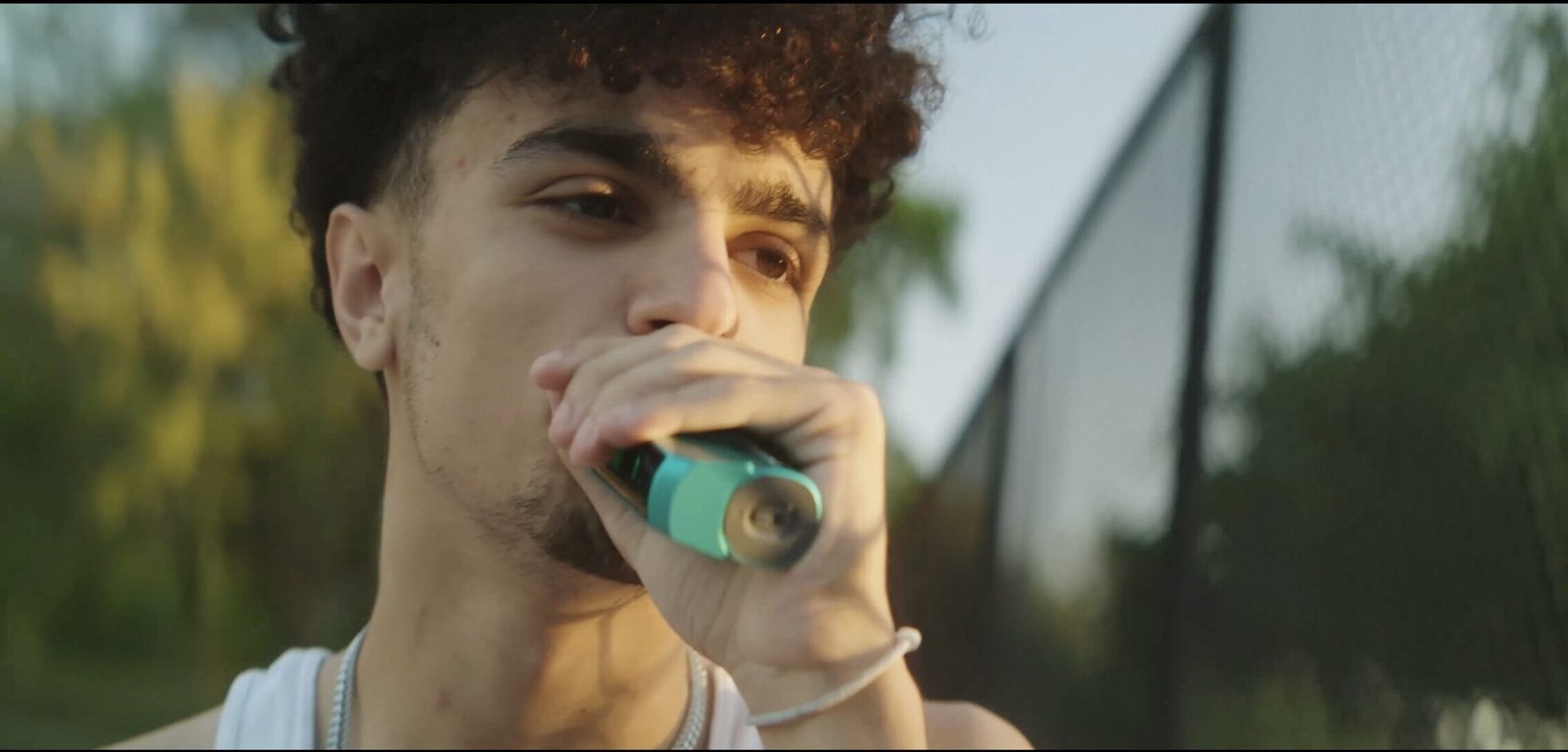
A younger boy on a basketball court, a kid who looks and carries himself like the person our protagonist used to be.
A hand reaches out to him.
It isn't the rabbi's.
It's our protagonist, walking over casually, meeting the kid at his level, the same way someone once did for him.
That's the arc I wanted, and it isn't rebellious kid becomes good kid. It's kid who needed someone becomes someone for somebody else.
Because the real measure of a place like this isn't whether a teenager starts behaving. It's whether he ends up with enough steadiness to carry somebody else.
The shoot
Making it
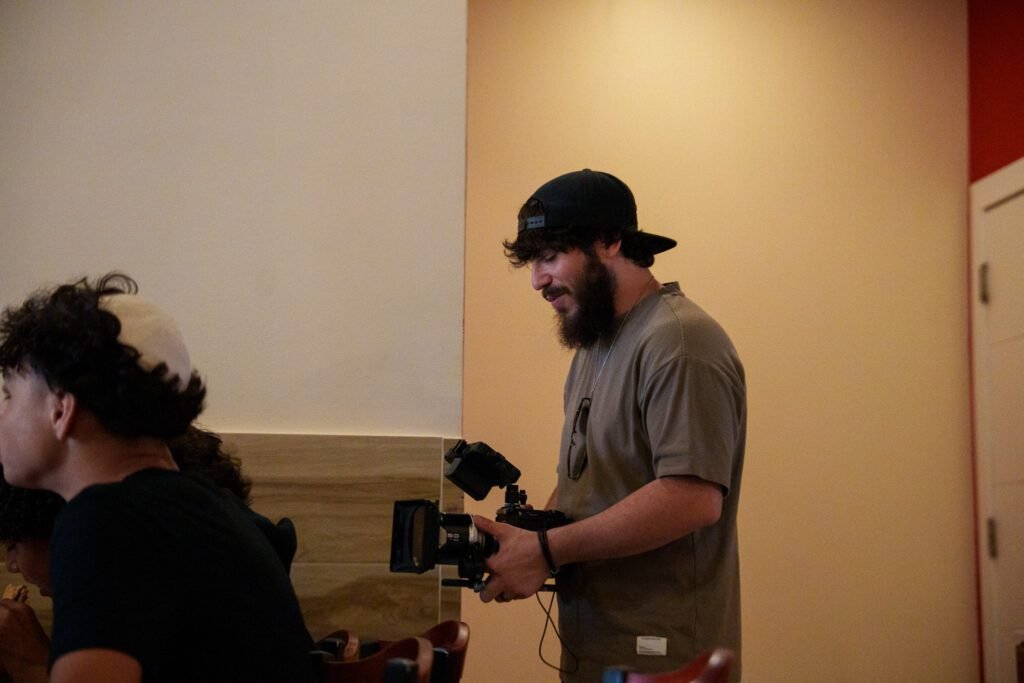
Several days of production across multiple locations: family scenes, exteriors, the gym, learning and mentorship, night work, the bonfire, and the basketball court payoff.
The whole discipline was restraint.
Material like this wants to become melodrama. Dialogue got cut every time a line started sounding like a speech. Performances had to feel lived-in rather than performed. The rabbi especially had to read as a real human being rather than a movie mentor, because the moment he becomes a type, the audience stops believing the relationship and the film has nothing left.
Even the small stuff mattered: boys joking around a fire, lifting together, a rabbi just being present. The message only works if you believe the relationships, and you only believe them if they look ordinary.
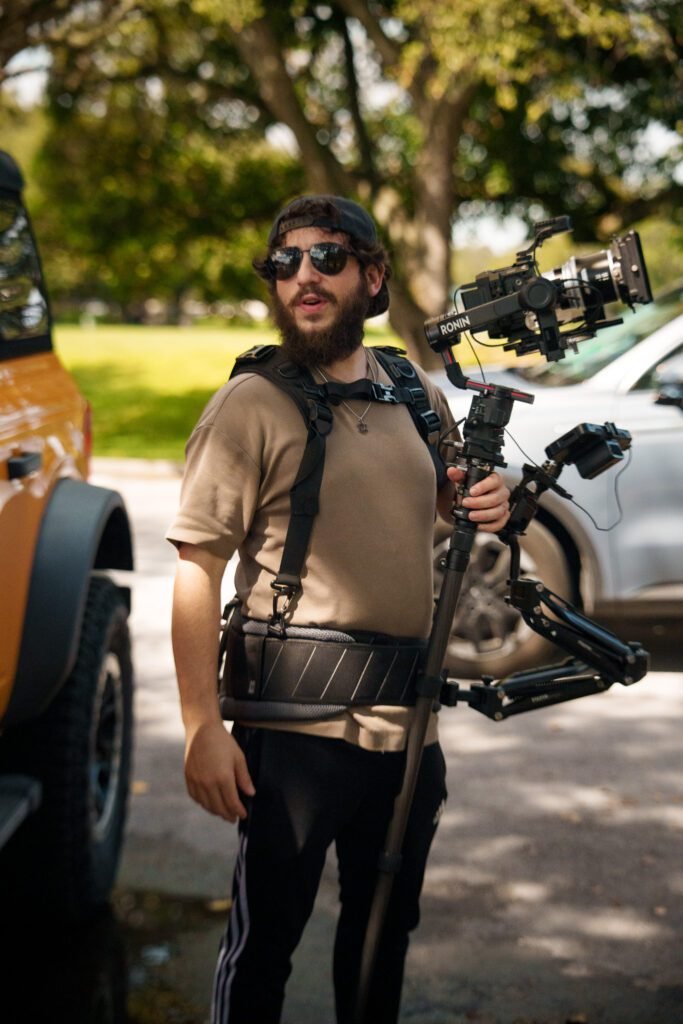
Produced and directed, Dov Gurewicz
Director of Photography, Atara Wolf
Gaffer, Eli Dreyfuss
Sound, Leopold Laya
The outcome
The result
The film became the centerpiece of the campaign, reached a wide audience, and helped drive significant support for the yeshiva.
But the thing I'd point to is what it does that a montage can't. Nobody watching is being told the yeshiva changes lives. They're watching one kid at a fire with someone who showed up, and reaching the conclusion on their own.
The strongest fundraising films don't just ask people to give. They give people a reason to care.
Watch the film
Yeshiva Ohr Shalom narrative short film
Have a story your organization needs people to feel, not just understand? Start a project →
The film
Full Gallery