Photography
Why I Love Landscape Photography: Tips & Insights for Stunning Shots

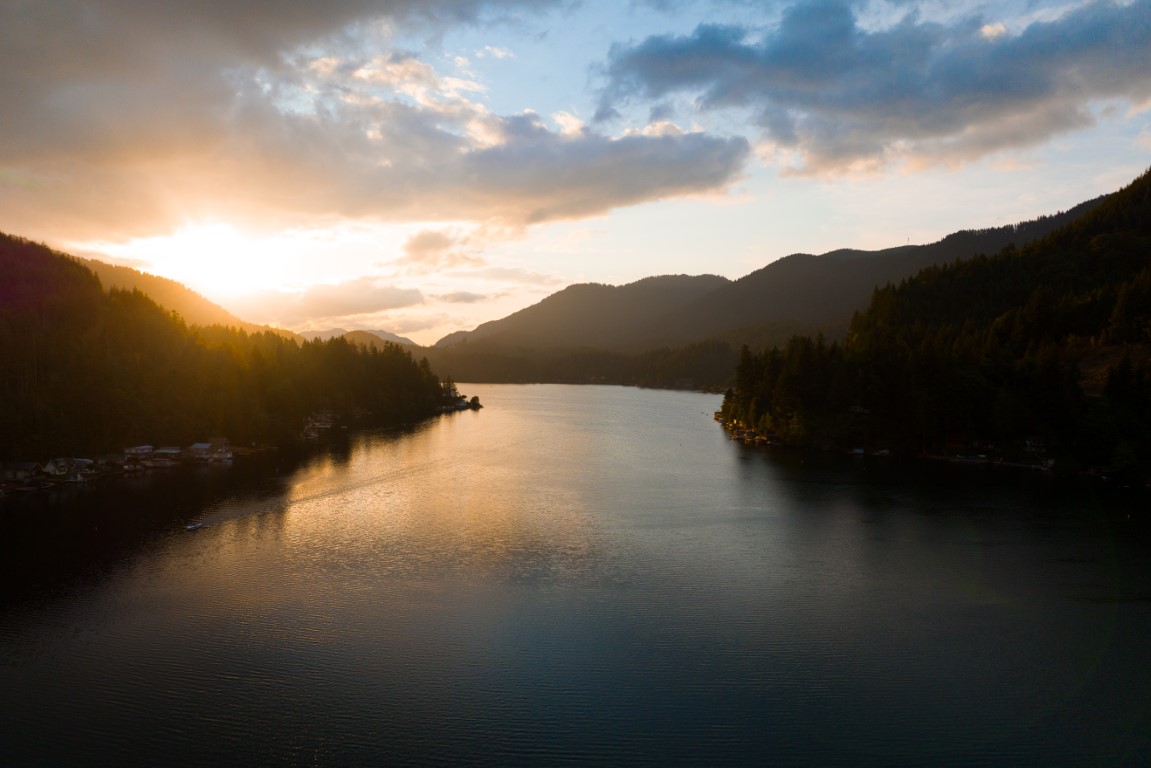
Landscape photography rewards patience more than almost any other genre: waiting for the right light, the right cloud cover, the right moment before or after the shot most people would have already put the camera away for.
A sunrise over a still lake, a field of flowers in the wind, mountains half-covered in cloud, each one holds more detail than a glance usually catches. Slowing down long enough to actually see it is most of the skill.
It isn’t just about wide shots of beautiful places. It’s about moments you can’t explain in words. A quiet sunrise, the way the light hits the trees after a storm, the stillness of a ridge at dusk. It’s all fleeting. Holding on to even a piece of that is what keeps me coming back.
It isn’t always easy either. You can spend hours waiting on light, or hike somewhere specific and find the weather has other plans. Those mornings still count. And when it does line up, you know immediately. You don’t need to check the back of the camera.
The light does most of the work
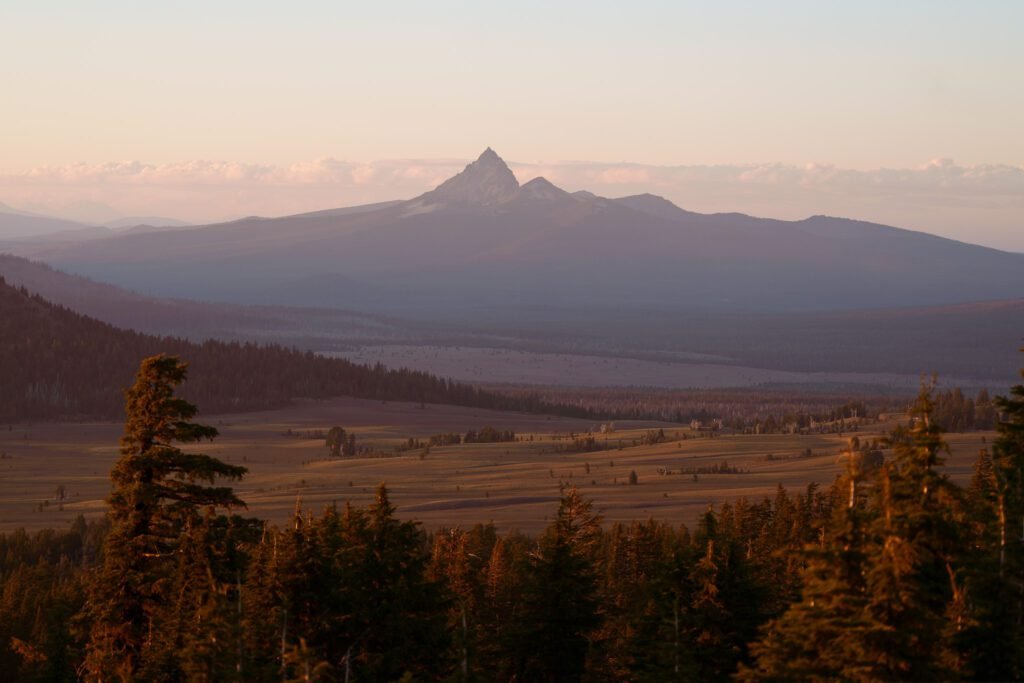
The hour matters more than the location. The same ridge is a postcard at noon and a photograph twenty minutes before the sun clears it.
First light is the one I plan around. It comes in low and pink, it moves fast, and it separates a peak from the valley behind it in a way midday sun flattens completely. Ten minutes later it’s gone and you’re shooting a different photo.
Dusk is the opposite trade. The light is weaker, but the sky holds color long after the sun is down and the water goes still. Most people pack up when the sun drops below the horizon. That’s usually when the better half starts.
Golden hour gets all the attention and it earns it. But the window I actually set an alarm for is wider than that: the stretch on either side, when the light is soft enough that nothing blows out and nothing falls into black. You get the whole scene, top to bottom, in one frame.
Bad weather is usually good news
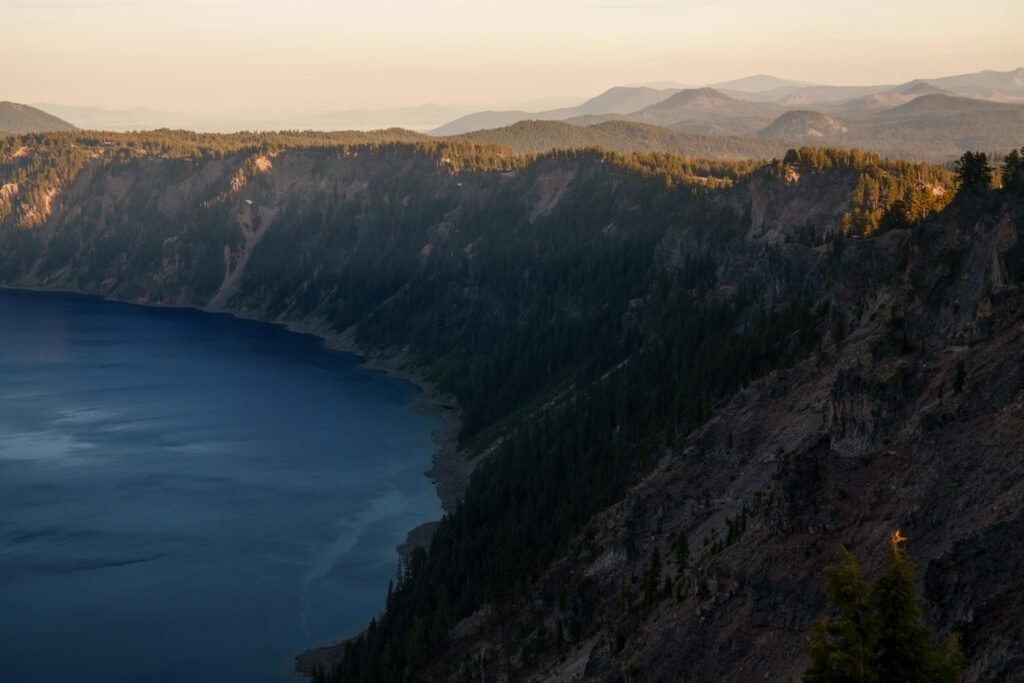
Clear blue sky is the least interesting sky there is. Cloud gives the light something to bounce off and gives the frame something to happen in.
Overcast is the best light for waterfalls and forest, which is the reverse of what most people assume. Direct sun through a canopy hands you blown highlights and black shadows in the same shot. A flat grey sky saturates the greens and lets you drag the shutter without the water turning into a white smear.
Fog does half the composing for you. It deletes everything you didn’t want in the frame and leaves the one shape you did. The days I’ve driven furthest for and come home with nothing were the clear ones.
Composition: what I’m actually looking for
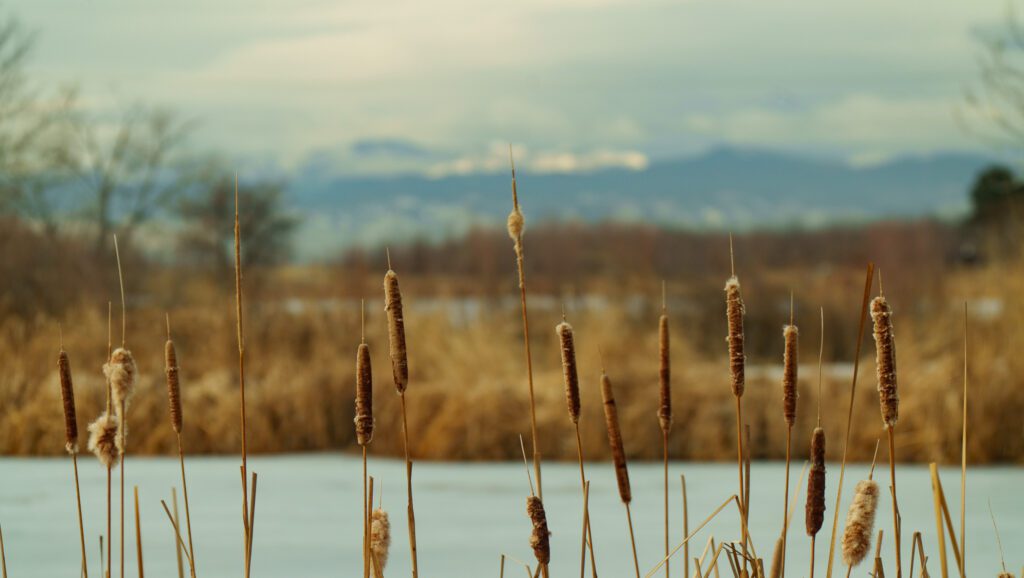
A wide view isn’t a photograph. It’s a view. Composition is what turns one into the other, and most of it comes down to three things.
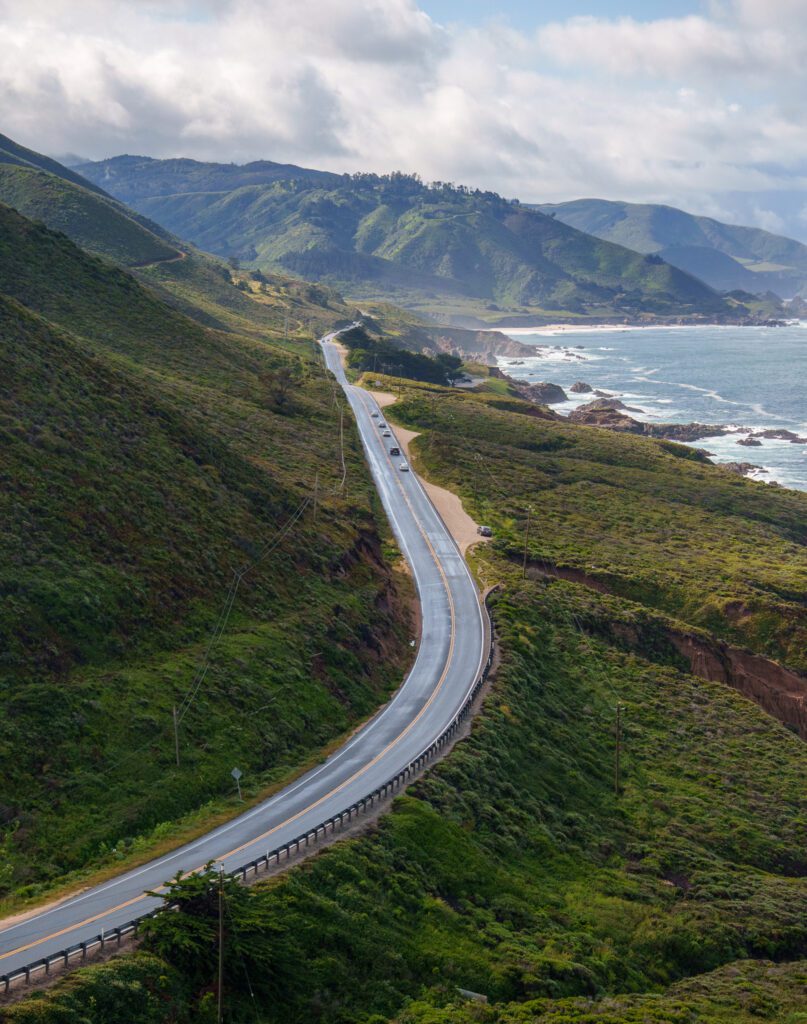
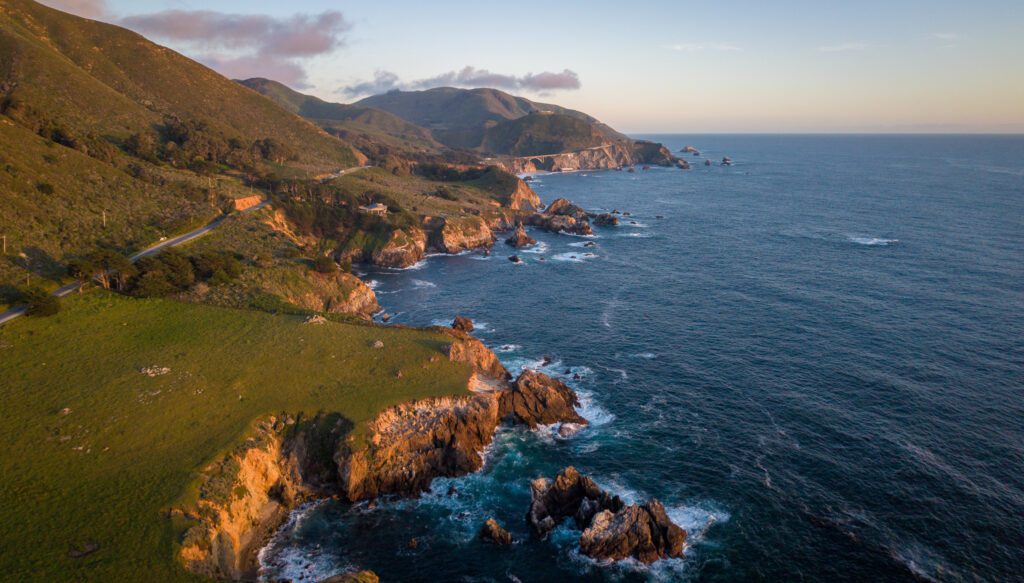
Something to lead the eye in. A road, a river, a shoreline. Highway 1 along Big Sur does it about as well as anything on earth, the road is the subject and the coastline is the reason.
Something to give it scale. A landscape has no size until you put something known next to it. A treeline against a snowfield, a car on a switchback, a person on a ridge. Without it, a three-hundred-foot waterfall and a thirty-foot one look identical.
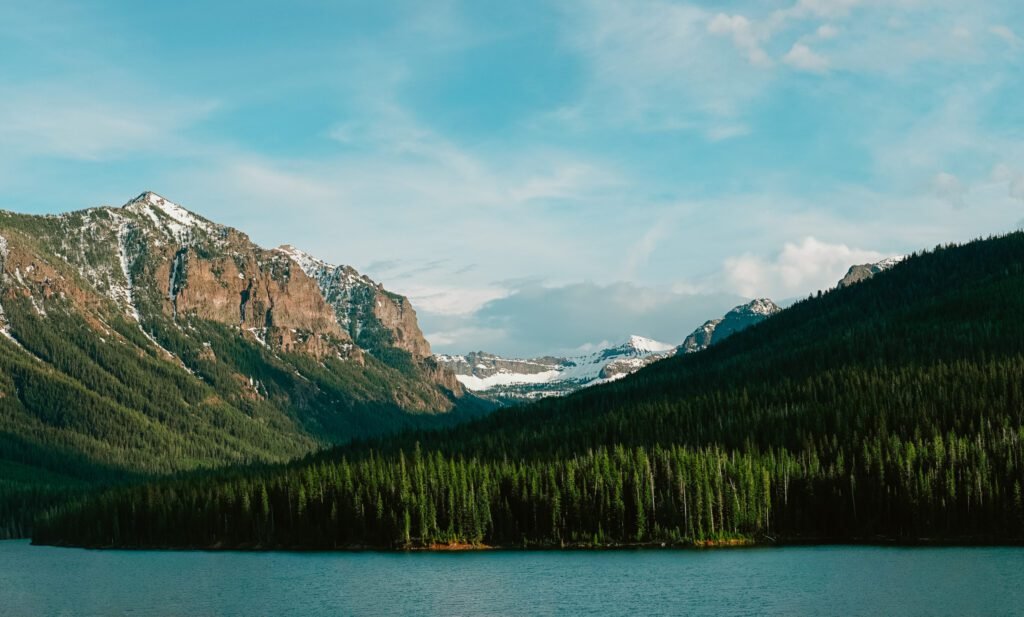
Layers. Ridge behind ridge behind ridge, each one a little lighter than the last. That separation is depth, and it’s the difference between a photo that feels like a place you could walk into and one that feels like a wall.
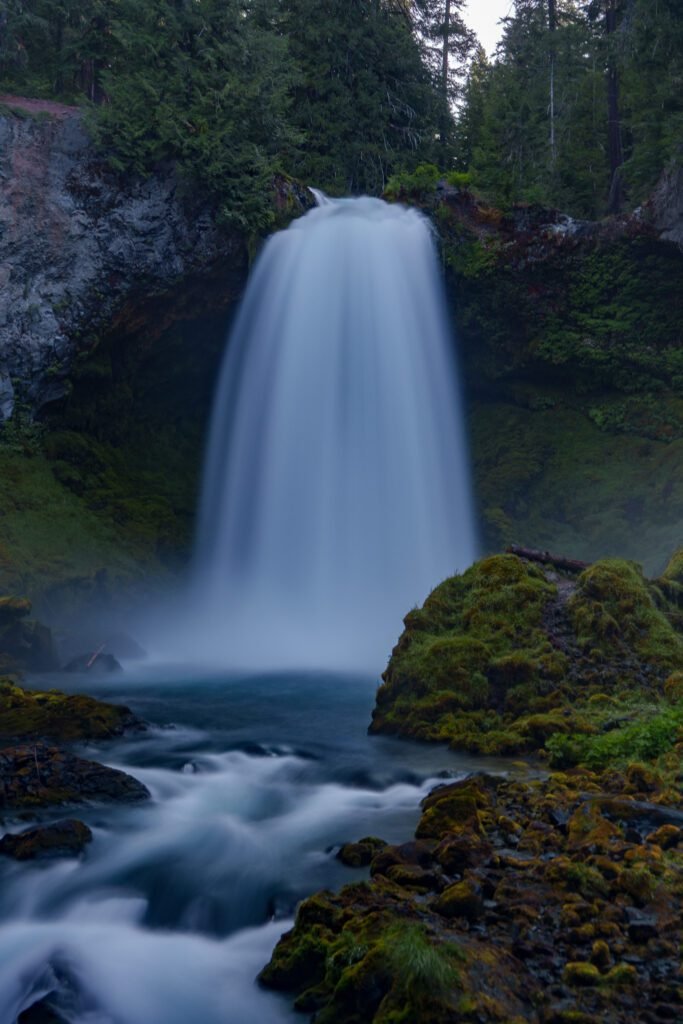
The last decision is which way to turn the camera, and it’s usually made for you. Waterfalls want vertical: the subject falls, so the frame should fall with it. Coastlines want horizontal. Fighting that costs you the shot more often than it wins you one.
What I keep going back to
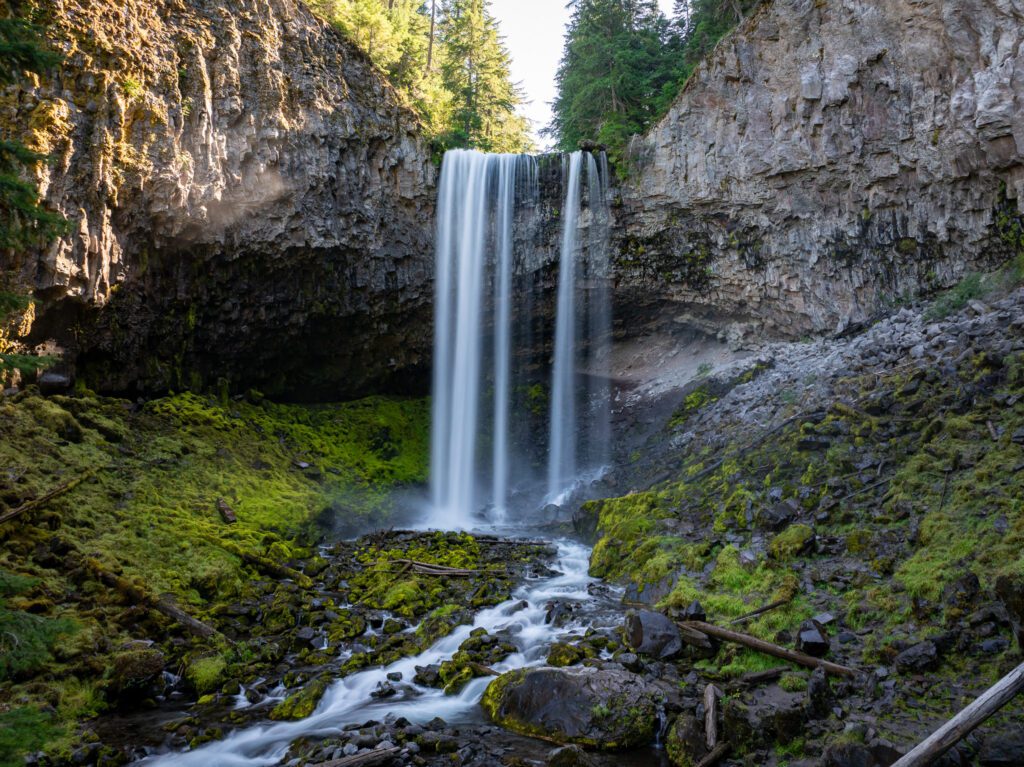
Water, mostly. Moving water gives you a variable nothing else does: the same scene changes completely with shutter speed, so one spot yields several different photographs instead of one. Sahalie and Koosah Falls sit close together on the McKenzie River in Oregon and shoot nothing alike.
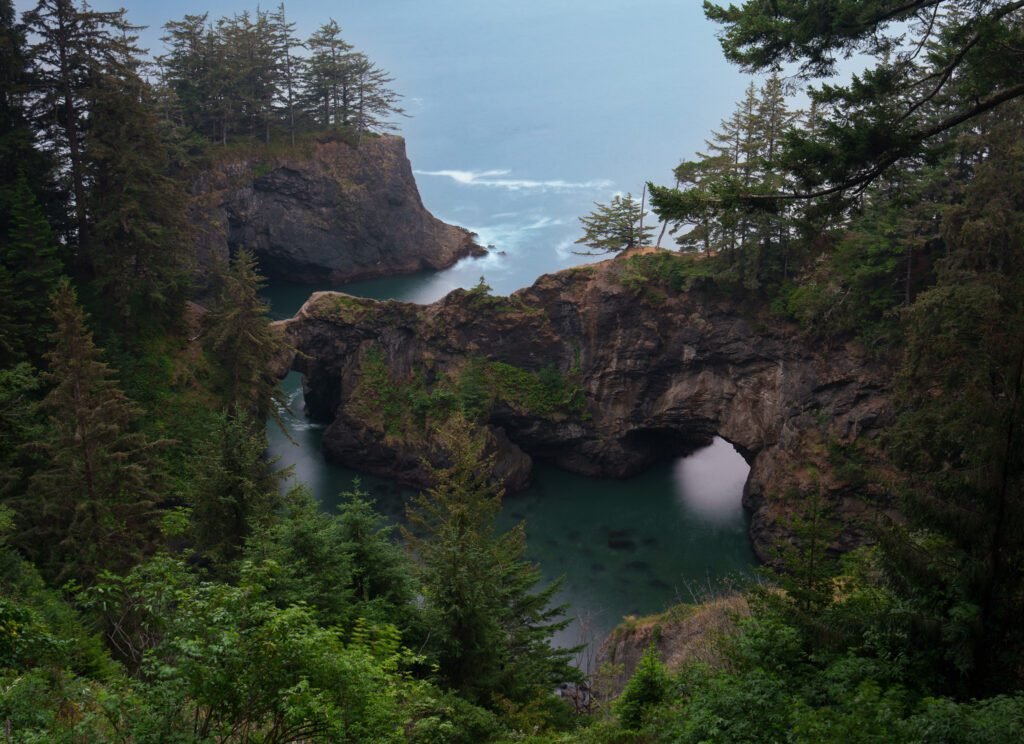
Coastline second. Rock takes the same wave a thousand times and the photograph is different every time. The Samuel H. Boardman corridor on the Oregon coast is a long exposure by default, the sea arches only read once the water smooths out enough to see through it.
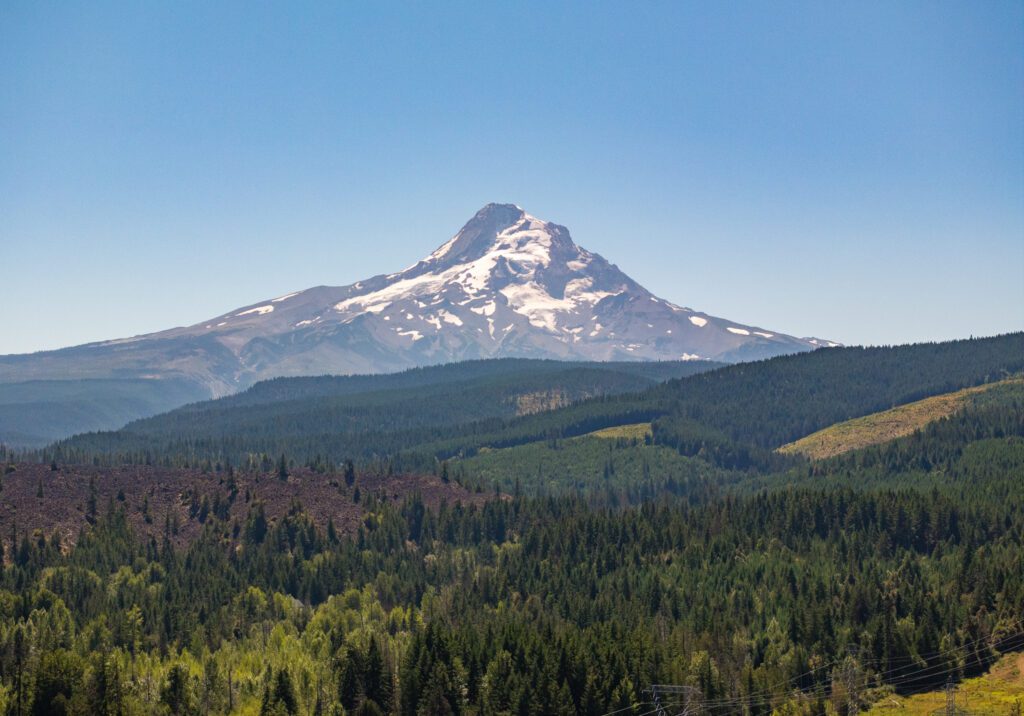
Mountains whenever I can get to them. Mount Hood from the air, the Skyline Trail on Rainier on foot: two completely different ways of shooting the same kind of subject, and I’d take either one.
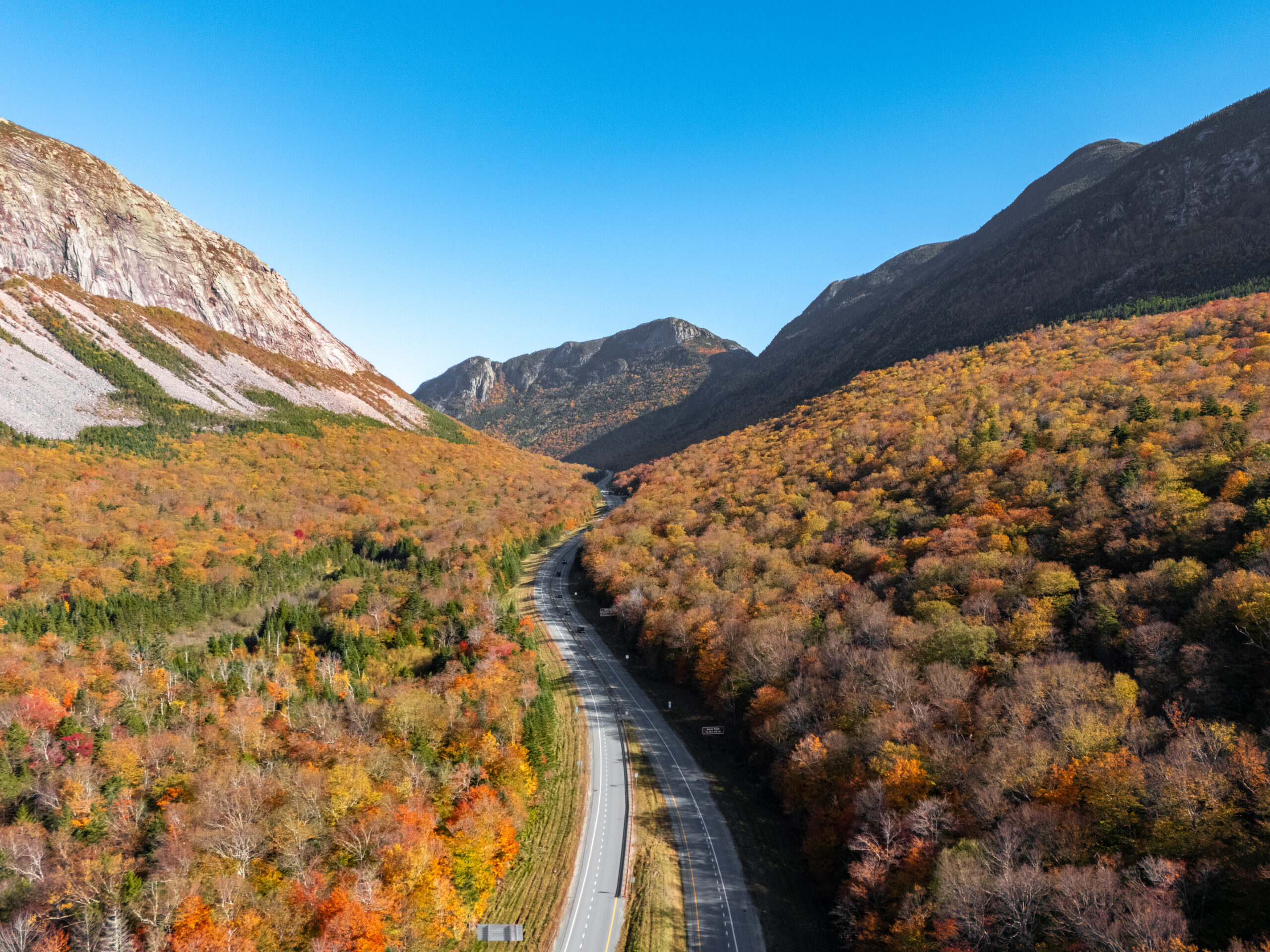
And autumn is the one season worth building a trip around. It’s short, it’s regional, and it turns a valley you’d have driven straight past in July into something you pull over for.
Style: the decisions that make it yours
Put four photographers on the same overlook and you get four different photographs. That’s a series of choices, not an accident.
Shutter speed. Fast water freezes into texture. Every droplet, every edge. Slow water turns into cloth. Neither is the correct answer. They’re two different photographs of the same waterfall, and choosing between them is most of the work.
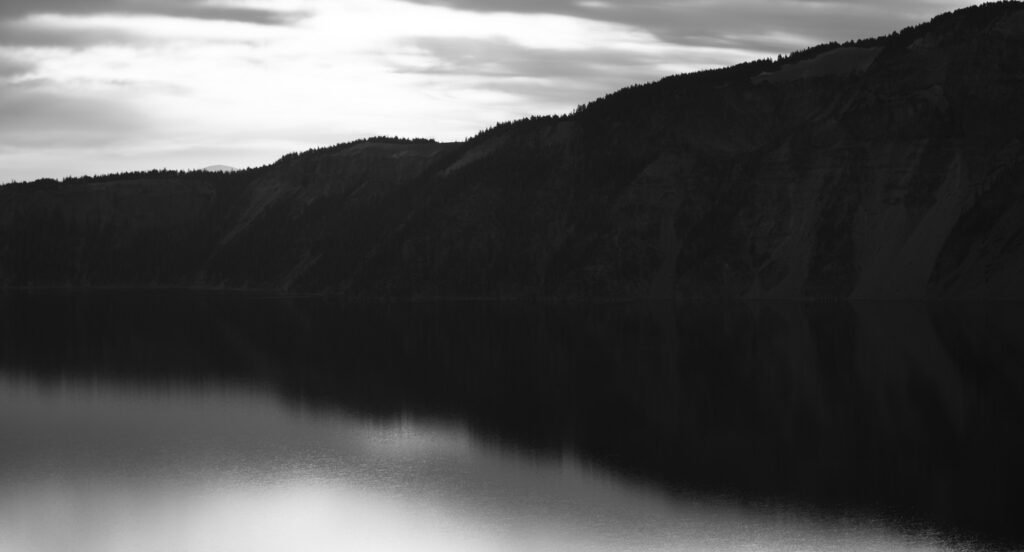
Black and white. Color carries a scene when the color is the point. When it isn’t, a grey lake, a bare ridge, a sky doing all the heavy lifting, stripping it out leaves shape and tone, and the photo usually gets stronger for it.
Altitude. A drone isn’t a shortcut to a better photo. It’s a different lens on the same place. From straight down a river reads as a line; from a hundred feet a highway becomes a curve. A good share of the compositions I fly for simply don’t exist from the ground.
Getting there. The best light and the hardest access tend to be the same answer. Almost everything in this post required being somewhere before it was reasonable to be there.
Lessons I’ve learned along the way
Over the years I’ve found landscape photography is as much about patience as it is about creativity. Sometimes you show up and the conditions are perfect. Other times you work with what you’ve got. Either way there’s something to take away.
- Show up early, stay late. The two ends of the day are where the photographs are. I’ve woken up at ridiculous hours to catch a sunrise and I’ve never once regretted it.
- Find the story in the scene. A good landscape isn’t just pretty, it’s compelling. A winding trail leading into the distance, a lone tree against the horizon. I look for the one element that gives the place its personality.
- Take the detour. Some of my favorite shots happened because I turned off the road I was on. The best views aren’t always on the marked route.
Why I keep shooting
For me landscape work is about more than the pictures. It’s about being present. When I’m out there I’m not thinking about emails or deadlines. I’m just there: watching the light shift, feeling the wind, hearing what the place actually sounds like. It’s grounding in a way few things are.
Then there’s the sharing. When someone looks at one of my photos and says “I feel like I’m there,” that’s the best compliment I get. That’s the whole point, putting someone in that moment for a second.
So if you’ve never tried it, go. Get outside, find a view that makes you stop, and see what happens when you press the shutter. You might not come back with anything the first time. Go again.
Frequently Asked Questions
What is the best time of day for landscape photography?
The hour matters more than the location. The same ridge is a postcard at noon and a photograph twenty minutes before the sun clears it. First light is what I plan around, and dusk is the opposite trade: weaker light, but the sky holds color long after the sun is down. Most people pack up right when the better half starts.
Is bad weather bad for landscape photos?
Usually the opposite. Clear blue sky is the least interesting sky there is. Overcast is the best light for waterfalls and forest, because direct sun through a canopy gives you blown highlights and black shadows in the same frame. Fog does half the composing for you by deleting everything you did not want.
What separates a landscape photograph from just a nice view?
Three things. Something to lead the eye in, like a road, a river or a shoreline. Something to give it scale, because a landscape has no size until you put something known next to it. And layers, ridge behind ridge, because that separation is what reads as depth.
Should a landscape be shot horizontal or vertical?
The subject usually decides for you. Waterfalls want vertical, because the subject falls and the frame should fall with it. Coastlines want horizontal. Fighting that costs you more shots than it wins.
That same patience shows up in abstract photography too: different subject, same instinct. See more of the landscape work in the photo portfolio, or get in touch about a shoot.
Landscape work is why I travel. If you want that eye pointed at your place, start here.
Related Posts
Photography & Psychology: How Photography Shapes Mindset and Growth
Discover Stunning Perspectives with Aerial Photography
