Project
Details
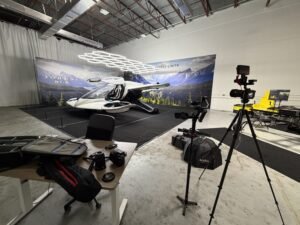
Doroni moved into a new facility, and by the time I came back the full-scale H1-X was standing in it. The first film had to make people believe the aircraft was coming. This one had to show them the aircraft.
What the film had to do
It runs five and a half minutes and walks the design a chapter at a time: the drone technology it grew out of, the ducted fans, the wings, charging, the battery, the cockpit, the parachute, and why any of this is happening now. That is a lot of engineering to hold someone through, so the shooting had to earn the attention. Close on the parts that carry the argument, wide only where the scale is the point.
How we shot it
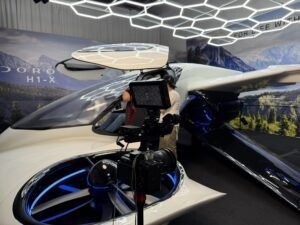
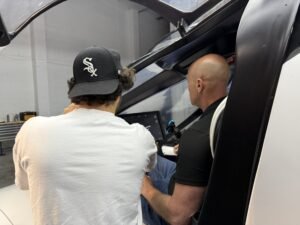
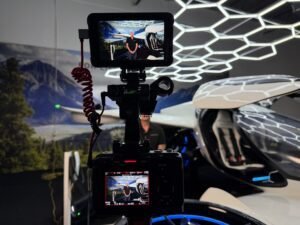
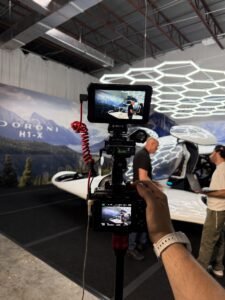
Joseph Abehsera directed again. We worked the aircraft detail by detail: the rotors, the canopy, the flight display, the eighteen inch tablet and the single joystick that make up the entire cockpit. Those are the things you can only sell by showing, and they are the reason to be in the room instead of working from renders. Photographs undersell the thing. Up close it reads as a finished aircraft rather than a concept, and the wing against a person standing beside it is the shot that tells you so.
The two chapters that do the persuading
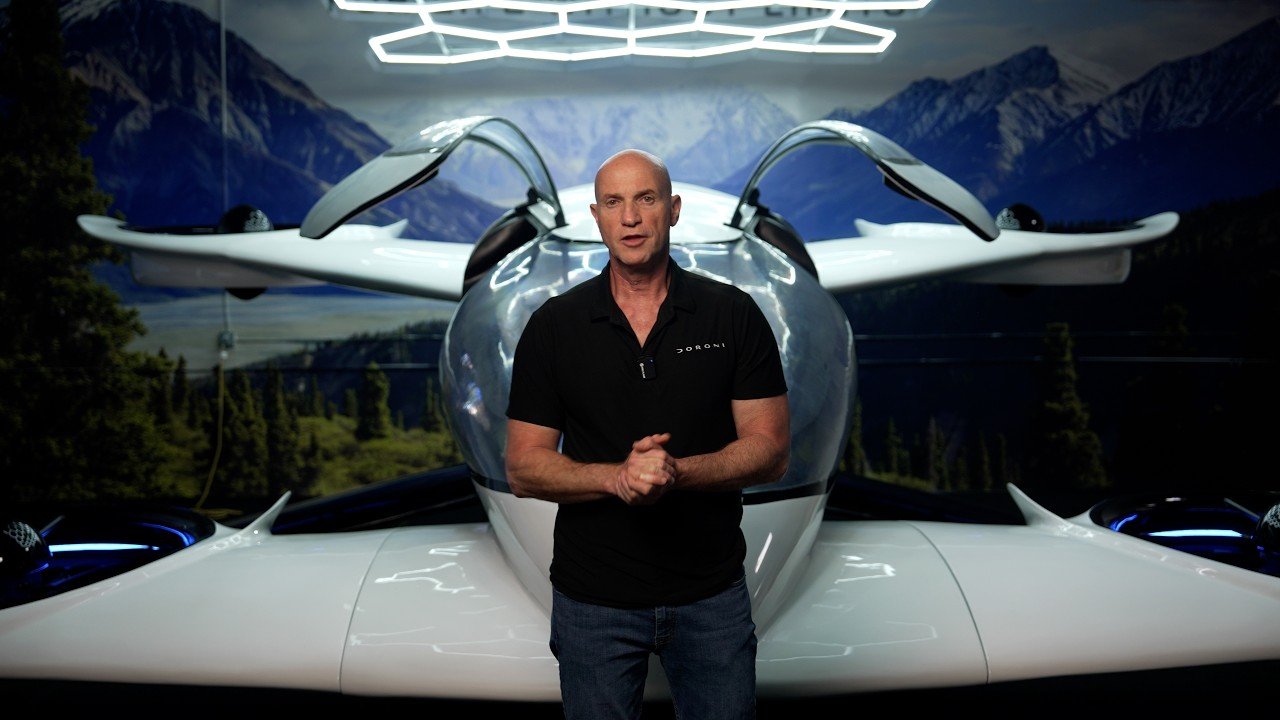
Two sections carry more weight than the rest. One is the parachute, because the first question anyone asks about a personal aircraft is what happens when something fails. The other is the closing argument for why flying cars are arriving now rather than in another decade, which Doroni puts down to the technology, the regulation and the demand all landing at the same time. Both are talking-head material, so the job on the day was to keep the aircraft in frame behind the answer and let the thing itself do some of the arguing.
The aircraft
The H1-X carries two seats, eight vertical ducted fans and two horizontal ones, with a ballistic parachute as the backstop. No exposed rotors. It measures nineteen feet by seven, sized to fit a standard two-car garage, and the whole cockpit is an eighteen inch tablet and one joystick. Doroni's published figures put it at 120 mph, roughly 100 miles of range and a 25-minute charge.
Where the company is
Doroni Aerospace was founded in 2021 by Doron Merdinger, and the goal is private flight for ordinary people rather than an air-taxi fleet. By the time they unveiled the full-scale model in March 2026 they had five patents granted, an FAA special airworthiness certificate for prototype testing, more than seventy test flights behind them and over six hundred pre-orders. FAA certification is the 2027 target and deliveries to neighborhoods are the 2028 one. Those are their numbers and their timelines, not mine.
That is what makes a film like this worth making properly. An emerging industry does not get to assume anyone believes in it yet, and every company in the category is arguing the same case at the same time: that this is a real product and not a concept render. The film has to carry that argument, not just look good.

Additional Info
This is the second film I have shot for Doroni Aerospace. The first one, and how both came together, are in the Doroni Aerospace case study.
The company is at doroni.io.
Need a film that has to make complicated engineering land with people who are not engineers? Brand films, or start a project.
Behind the Scenes